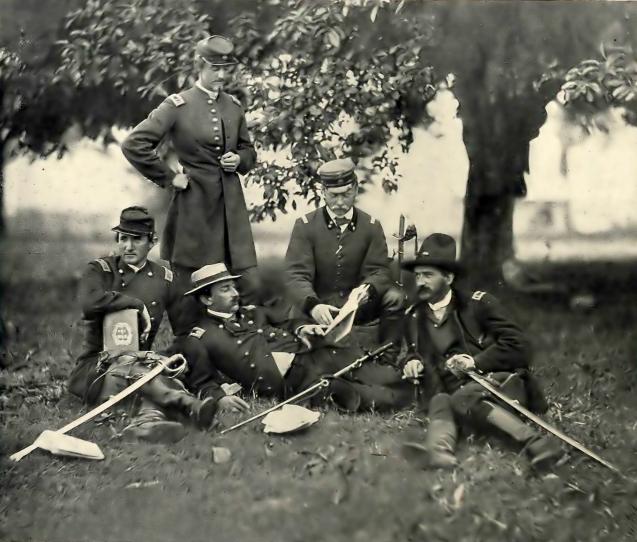
Definition: to admit the truth, to confess a lie, or acknowledge an obvious personal shortcoming....
Here are some fun terms and civil war slang-enjoy some Bark Juice, sit back and it won't be difficult to understand why most of these are now obsolete!
Absquatulate - to take leave, to disappear
Acknowledge the Corn - to admit the truth, to confess a lie, or acknowledge an obvious personal shortcoming
Arkansas Toothpick - a long, sharp knife
A.W.O.L. - Absent With Out Leave
Bad Egg - bad person, good for nothing
Balderdash - nonsense
Bark Juice, Red Eye, O Be Joyful - liquor
Beat the Dutch - if that don't beat all
Bluff - trick or deceive
Bragg's Body Guard - lice
Been Through the Mill - been through a lot, seen it all
Bellyache - complain
Big Bugs - big wigs, important people
Bivouac - to camp without formal shelter or in temporary circumstances
Blowhard - braggart, bully
Blue Mass - refers to men on sick call; named after blue pill.
Bread Bag - haversack
Bread Basket - stomach
Bully - exclamation meaning, &'terrific!' or 'hurrah!'
Bully for You - good for you
Bummer – malingerer, someone who deliberately lags behind to forage or steal on his own shrift
Bummer's Cap - regulation army cap with a high/deep crown, so-called because it could be filled with gathered foodstuffs
Bust Head / Pop Skull - cheap whiskey
Camp canard - tall tale circulating around camp as gossip
Cashier - to dismiss from the army dishonorably
Chief Cook and Bottle Washer - person in charge, or someone who can do anything
Chicken Guts - gold braid used to denote officer ranks
Company Q - fictitious unit designation for the sick list
Conniption Fit - hysterics, temper tantrum
Contraband - escaped slaves who sought refuge behind Union lines
Copperhead - Northern person with Southern, anti-Union sympathies
Cracker Line - supply line for troops on the move
Deadbeat - useless person, malingerer
Desecrated Vegetables - Union, dehydrated (desiccated) vegetables formed into yellowish squares
Dog Robber - soldier detailed from the ranks to act as cook
Dog Collar - cravat issued with uniforms, usually discarded
Duds - clothing
Embalmed Beef - canned meat
Essence of Coffee - early instant coffee, found in paste form
Forage - to hunt for food, live off the land; also came to mean plundering enemy property for sustenance
Fit as a fiddle - in good shape
Fit to be tied - angry
Forty Dead Men - a full cartridge box, which usually held forty rounds
French Leave - to go absent without leave
Fresh Fish - new recruits
Go Boil Your Shirt - take a hike, get lost, bug off
Grab a Root - eat a meal, especially a potato
Greenbacks - money
Grey Backs - lice, also derogatory term for Confederate soldiers
Grit - courage, toughness
Goobers - peanuts
Hanker - a strong wish or want
Hard Case - tough guy
Hard Knocks - hard times, ill use
Hardtack - unleavened bread in the form of ¼ inch thick crackers issued by the army
Haversack - canvas bag about one foot square, which was slung over the shoulder and used to carry a soldier's rations when on the march
High-falutin - highbrow, fancy
Horse Sense - common sense, good judgement
Hospital Rat - someone who fakes illness to get out of duty
Housewife - sewing kit
Huffy, In a Huff - angry, irritated
Humbug - nonsense, a sham, a hoax
Hunkey Dorey - very good, all is well
Jailbird - criminal
Jawing - talking
John Barleycorn - beer
Jonah - someone who is or brings bad luck
Knock into a Cocked Hat - to knock someone senseless or thoroughly shock him
Let 'er Rip - let it happen, bring it on
Let Drive - go ahead, do it
Likely - serviceable, able-bodied
Light Out - leave in haste
Long Sweetening - molasses
Lucifers - matches
Muggins - a scoundrel
Mule - meat, especially if of dubious quality
Mustered Out – wry term meaning killed in action
No Account - worthless
Not By a Jug Full - not by any means, no way
On His Own Hook - on one's own shrift, without orders
Opening the Ball - starting the battle
Opine - be of the opinion
Peacock About - strut around
Peaked - pronounced peak-ed; weak or sickly
Pie Eater - country boy, a rustic
Pig Sticker - knife or bayonet
Picket - sentries posted around a camp or bivouac to guard approaches
Play Old Soldier - pretend sickness to avoid combat
Played Out - worn out, exhausted
Pumpkin Rinds - gold lieutenant's bars
Quartermaster Hunter - shot or shell that goes long over the lines and into the rear.
Quick Step, Flux - diarrhea
Robber's Row - the place where sutlers set up to do business
Row - a fight
Salt Horse - salted meat
Sardine Box - cap box
Sawbones - surgeon
Scarce as Hen's Teeth - exceedingly rare or hard to find
Secesh - derogatory term for Confederates and Southerners: secessionists
See The Elephant - experience combat or other worldly events
Shakes - malaria
Shanks Mare - on foot
Sheet Iron Crackers - hard tack
Shoddy - an inferior weave of wool used to make uniforms early in the war; later came to mean any clothing or equipment of substandard quality
Sing Out - call out, yell
Skedaddle - run away, escape
Slouch Hat - a wide-brimmed felt hat
Snug as a Bug - very comfortable
Somebody's Darling - comment when observing a dead soldier
Sound on the Goose -
Sparking - courting a girl
Spondulix - money
Sunday Soldiers / Parlor Soldiers - derogatory terms for unsuitable soldiers
Take an Image - have a photograph taken
Tennessee or Virginia Quick Step - diarrhea
Tight - drunk
Toe the Mark - do as told, follow orders
Top Rail - first class, top quality
Traps - equipment, belongings
Tuckered Out - exhausted
Uppity - arrogant
Vidette - a sentry same as Picket but usually on horseback
Wallpapered - drunk
Whipped - beaten
Wrathy - angry
Zu Zu - Zouaves, soldiers whose units wore colorful uniforms in a flamboyant French style with baggy trousers, known for bravery and valor
Thursday, May 3, 2012
What is a Quartermaster?
A Quartermaster's Luncheon will be served this weekend from 11:00-3:00pm during the festivities marking the 150th Commemoration Celebration of the Civil War for this area on Saturday, May 5th and Sunday, May 6th, 2012. While 2013 is the official year observing this anniversary, 2012 will be very memorable as well, with several events to mark the occasion.
Some of you may not be familiar with the term Quartermaster. Here is a very informative link courtesy of the American Civil War Website which you can read up on here: http://americancivilwar.com/tcwn/civil_war/QuarterMaster_History.html
The Historic Fairfield Inn's Quartermaster Luncheon will promise not to disappoint as Mrs. Lee will join guests while they sample authentically prepared Civil War menu items that brought both comfort and sustenance to soldiers.
This weekend's Luncheon Menu is pre-fixe and will offer a choice of one appetizer, one entree and choice of home baked pies. The selections are as follows:
Fresh Fruit Cobbler
Mansion House Salad
Ham & Bean Soup
Chef's Choice Quiche
Soldier's Waffle
Catch of the Day
Chicken & Biscuits
Roasted Loin of Pork
Assortment of Home Baked Pies
All entrees served with Johnny Cakes, Hardtack, and Idiot's Delight (biscuits, honey and raisins)
Cost is eighteen greenbacks ($18.00) per person, reservations recommended, however walk ins are welcome!
We look forward to having you join us for this special weekend !
Friday, April 13, 2012
We Are Proud Members of the Gettysburg Wine and Fruit Trail
"The Gettysburg Wine & Fruit Trail, a unique consortium of local family businesses, is home to some of the most beautiful landscapes in the area, including the South Mountain Fruit Belt and the foothills of the Appalachian Mountains."
Visit vineyards nestled in the mountainside, sip wine and take in the spectacular settings. Drive through sprawling orchards and visit farms offering the best local produce and nurseries boasting beautiful plants,trees and shrubs. Wrap it all up with a delicious meal at our Inn, followed by a luxurious stay in one of our deluxe rooms or suites.
Commemoration Celebration of the 150th Anniversary of the Battle of Fairfield Schedule of Events-Saturday and Sunday, May 5 and 6
"Medal of Honor",
Don Stiver, Artist
Saturday, May 5th
9:30am-5pm: Living History Village open to the Public (Steelman Street)9am: Meet the Union Generals as they plan the battle (108 West Main Street)
10am-11:30am Special Presentation by Tim Smith (Adams County author and historian) (108 West Main Street)
11am, 12pm,1pm-Civil War Era House Tours$
11am-3:00pm- "Lunch with Mrs. Lee" Quartermaster's Luncheon (Historic Fairfield Inn, 15 West Main Street)$
12Noon- A Taste of History, Wine and Dine-(Historic Fairfield Inn, 15 West Main Street) $
12 Noon: Insight into the Civil War Spy Organizations (108 West Main Street)
1pm: A Moment with General Longstreet (108 West Main Street)
3pm: Meet the Southern Generals and their staff (108 West Main Street)
4pm: Insightful conversations with General and Mrs. Lee (108 West Main Street)
2:00pm REENACTMENT BATTLE:"Conferderates Attempt a Rear Guard Movement" (Landis Farm, N. Miller Street)
7:00pm-9:00pm Bonfire with Music and Songs at the Fairfield Inn with Ken Courtney (Historic Fairfield Inn, 15 West Main Street.)
Sunday, May 6th
8:30am Living History Village-Free and Open to the Public -(Civil War Encampment, Steelman Street)9:00am-4:00pm Living History Village (108 West Main Street)
9:00am Period Church Service in the Town Hall (108 West Main Street)
10am-Ladies Relief Society Speaks of the Courageous Efforts During the War-(108 West Main Street)
2:00pm REENACTMENT BATTLE: “The Union Cavalry Protects the Gap” (Landis Farm, N. Miller Street)
3:00pm Meet the Union and Confederate Generals for a Q & A (108 West Main Street)4:00pm Closing Ceremony, Roll of Honor and Taps at (The Historic Fairfield Inn)
$-Cost
Sponsored by the Town of Fairfield http://www.battleoffairfield.com//
Thursday, March 1, 2012
A Photo Essay of the Inn
So, you're planning your trip to visit us and wondering just what is all the buzz about our Inn? Well, here is a little summary in pictures of what you will see ....
This is our parlour, and the newer part of the house. This addition came into existence in 1801. This room also served as a hospital during the Civil War.
Going through the parlour you will enter the "Eisenhower Room" where, you guessed it! Mamie and Ike would often escape here, to one of their favorite spots in the area, to have a delicious meal.
From the Eisenhower Room you step down into the Main Dining Room which seats about 80 comfortably...
A prototype of a plaque made to be displayed on the Battlefield and one of the many artifacts you will enjoy seeing here.
This is our parlour, and the newer part of the house. This addition came into existence in 1801. This room also served as a hospital during the Civil War.
Going through the parlour you will enter the "Eisenhower Room" where, you guessed it! Mamie and Ike would often escape here, to one of their favorite spots in the area, to have a delicious meal.
From the Eisenhower Room you step down into the Main Dining Room which seats about 80 comfortably...
A prototype of a plaque made to be displayed on the Battlefield and one of the many artifacts you will enjoy seeing here.
This room is the oldest part of the house, built by Squire Miller in 1757. Boasting a gorgeous working fireplace , this room is still enjoyed for special occasions when guests want a more private and intimate setting. (It can seat up to 12.)
In this room, you will see the door which boasts an original lock from the days of Squire Miller. This is said to be the best lock in the entire house!
Our Tavern has a full bar and also the oldest liquor license in Gettysburg. This room is a wonderful setting to enjoy a nice meal with yet another huge working fireplace which is used through out the year.
Going upstairs, we have several well appointed rooms, each one very unique. This is the J.E.B. Stuart Room which the General occupied on the Confederate Retreat. This view is coming through the door
This is a view of the queen size bed:
And the spacious modern bathroom....
This is the Patrick Henry room, where Mr. Henry actually stayed. (He was the nephew of the lady of the house.)
A beautiful view of the popular clawfoot tub in the bathroom....There is a separate neo-angle shower unit, too.
This is the Grumble Jones Room, named after a Confederate General who fought in the Battle of Fairfield, behind our Inn. This battle occurred at the same time as the Battle of Gettysburg. This is a view from the door entering the room. There is a lovely, modern bath in this room with a jetted tub.
If you love history, this is the room to stay in. It is the 1757 suite, above the 1757 room shown previously. This is where the family spent their nights. It is also where Ghost Lab stayed and supposedly captured lots of activity via their cameras and microphones....
This is the mirror where they saw a "shadow person". Notice the spectacular stone chimney which rises up from the room beneath.
Moving to the third floor, this is the Three Colonels Room, named after three men who thought they were mortally wounded during the Battle of Fairfield. They retired to this room in 1863, thinking this is where they would see their final days.
The good news is they all survived their injuries. This is how the suite looks today...
Here is the lovely soaking tub, perfect for relaxing after a tour of the battlefield, perhaps?
(Our 6th and last room on our journey is The Major Starr guest room which was being occupied at the time this was written. Stay tuned for a picture just as soon as it is free. (But the Inn is constantly busy, so we're not sure when that will be!)
We hope you've enjoyed the photo tour and we invite you all to come for a visit just as soon as you can. You've heard the phrase "Things are so much better in person." Well,they are! The pictures just can't do this beautiful landmark the justice that it deserves. Not to mention our wonderful staff who will bend over backwards to ensure you have the best stay possible.
Thanks for visiting and have a wonderful day!
Tuesday, February 7, 2012
Valentine's Day At The Inn....
Perhaps Squire Miller presented his wife with an embellished adornment of Cupid or a bouquet of flowers, some hearts, a few love birds; closely resembling the forthcoming Valentines of the upcoming 19th Century. (Germans who were settling in the United States at this time introduced this particular form of greeting with its Baroque ornamental style ultimately spreading to other parts of the country, thus paving the way for our modern Valentines).
On this amorous day of note, bring your significant other to Our Mansion House Restaurant for a special prix fixe menu for two which includes Traditional Surf & Turf, Juicy Fried Oysters, Beef Crostini, Sweetheart Salad, Chef's Seafood Chowder and a Gooey Hot Fudge Sundae. Call for Reservations (717) 642-5410
Sunday, February 5, 2012
The Superbowl and The Civil War
How did those poor boys ever survive without one of America's favorite pastimes, the Super Bowl? Look out, Eli and Tom; a little digging uncovered that during the civil war, soldiers would often pass the time (especially during the winter months) reading, partaking in musical "jam" sessions, enjoying a game of cards,dominos,chess or the occasional game of baseball.
One might take a moment and ponder if there had been a Super Bowl back then, Robert E. Lee or George Meade asking for a pause in the battle while they checked the score on the game. Oh, how things have changed so drastically over the years.....While it is a great way for Americans today to kick back and relax and enjoy an event like this , let's take a minute to remember those who came before us and sacrificed so much so we can enjoy everything that is so great about this wonderful country we live in. Those men and women of yesteryear had much simpler pleasures and lifestyles.Soldiers enjoying a game of chess
Friday, January 20, 2012
Coincidence?
January seems to symbolize the start of new things, fresh approaches and change. Each year we choose a project to complete; last year the Main Dining Room got a "makeover".
This year the Parlour was on the top of list for a new coat of paint, and preparations were made; the holiday decorations were packed away, the furniture was moved and the staff set to work on the transformation. The undertaking was completed in about a week, and finally, we were able to step back and appreciate all the hard work that had been done.
Someone made a comment about the red paint and how fantastic it looked. Together with the white and blue trim, it looked patriotic. "What color red is that?" someone asked.
The owner, Joan, replied "To Die For Red." She admits she hadn't even paid attention to the name until later on, when she had to order more when she was running low.
Everyone agreed that this seemed very fitting for the Parlour, as it had once served a role as a Civil War Hospital.
This year the Parlour was on the top of list for a new coat of paint, and preparations were made; the holiday decorations were packed away, the furniture was moved and the staff set to work on the transformation. The undertaking was completed in about a week, and finally, we were able to step back and appreciate all the hard work that had been done.
Someone made a comment about the red paint and how fantastic it looked. Together with the white and blue trim, it looked patriotic. "What color red is that?" someone asked.
The owner, Joan, replied "To Die For Red." She admits she hadn't even paid attention to the name until later on, when she had to order more when she was running low.
Everyone agreed that this seemed very fitting for the Parlour, as it had once served a role as a Civil War Hospital.
Friday, December 30, 2011
A Place of Honor
-painting by Stan P.
We receive many wonderful praises from our guests, mostly in the form of a nice note or a review on Trip Advisor. However, this past week, we couldn't believe the very special gift bestowed upon us by Stan P. from Virginia. He and his lovely wife previously stayed with us for a weekend in October and to our pleasure and surprise, made plans to return with his sons,daughters and their spouses, for a holiday celebration weekend in December.
Imagine our surprise when Stan presented us on his arrival with this fantastic painting of the Historic Fairfield Inn, complete with all the details that make her so special. We are truly honored by this very special portrait which must have taken hours of work.
We are eagerly discussing places of honor where we can proudly display this. We hope when you come to visit, you will enjoy admiring this beautiful piece as much as we do. Again, thank you Stan for sharing your talent with us. We appreciate it more than words can ever say.
Monday, December 26, 2011
Epiphany
Friday, January 06, 2012
Time: 7:00pm
Culinary Event
Join us on the 'twelfth night of Christmas' as we bless the Inn by marking the eves in the dining room and tavern with the Chalk Blessing inscription 20+C+M+B+12 - the 20 and 12 signifies the new year, the four crosses stand for the four seasons, the letters C, M & B stand for the three wise men, Caspar, Melchior & Balthazar. There will be a special toast and everyone will receive chalk & the blessing. Reservations required.
Time: 7:00pm
Culinary Event
Join us on the 'twelfth night of Christmas' as we bless the Inn by marking the eves in the dining room and tavern with the Chalk Blessing inscription 20+C+M+B+12 - the 20 and 12 signifies the new year, the four crosses stand for the four seasons, the letters C, M & B stand for the three wise men, Caspar, Melchior & Balthazar. There will be a special toast and everyone will receive chalk & the blessing. Reservations required.
The History of Epiphany
January 6 is known in the Christian calendar as Epiphany. It is sometimes called the “Twelfth Night” being the 12th Day of Christmas. It signifies the event of the Magi, or Wise Men visiting the baby Jesus. So, the 12 days of Christmas don’t end at Christmas, Advent does. Instead, the 12 days start with Christmas, and end with Epiphany, and these 12 days are also sometimes called Christmastide. Epiphany is a Greek word that means manifestation, appearance, or showing forth. Historically, Epiphany began in the eastern Church as the celebration of the nativity of Jesus Christ. As the celebration of Christmas spread eastward, Epiphany changed to its present meaning. January 5th is Paramony, the Eve of the Feast of Epiphany.
.
.
Friday, December 16, 2011
Thinking of Those Before Us
In a letter to his sister Anna Simpson, Tally Simpson wrote:
"December 25th, 1862
My dear sister,
This is Christmas Day. The sun shines feeble through a thin cloud, the air is mild and pleasant, a gentle breeze is making music through the leaves of the lofty pines that stand near our bivouac. All is quiet and still and that very stillness recalls some sad and painful thoughts. The day, one year ago, how many thousand families, gay and joyous, celebrating Merry Christmas, drinking health to absent members of their family and sending upon the wings of love and affection long, deep, and sincere wishes for their safe return to the loving ones at home, but today are clad in the deepest mourning in memory to some lost and loved member of their circle..."
"When will this war end? Will another Christmas roll around and find us all wintering in camp? Oh! That peace may soon be restored to our young but dearly beloved country and that we may all meet again in happiness."
When everyone takes time to celebrate this joyous season, let us remember all of those before us who sacrificed so much for the good of our country.
"December 25th, 1862
My dear sister,
This is Christmas Day. The sun shines feeble through a thin cloud, the air is mild and pleasant, a gentle breeze is making music through the leaves of the lofty pines that stand near our bivouac. All is quiet and still and that very stillness recalls some sad and painful thoughts. The day, one year ago, how many thousand families, gay and joyous, celebrating Merry Christmas, drinking health to absent members of their family and sending upon the wings of love and affection long, deep, and sincere wishes for their safe return to the loving ones at home, but today are clad in the deepest mourning in memory to some lost and loved member of their circle..."
"When will this war end? Will another Christmas roll around and find us all wintering in camp? Oh! That peace may soon be restored to our young but dearly beloved country and that we may all meet again in happiness."
When everyone takes time to celebrate this joyous season, let us remember all of those before us who sacrificed so much for the good of our country.
Wednesday, December 14, 2011
Great Place, Great Food=Great Times!
The Historic Fairfield Inn was pleased to host a recent afternoon get-together for Mr. and Mrs. Martin and their lovely friends from Hagerstown,MD. The meal was replete with our famous Ham and Bean Soup, Chicken and Biscuits and plenty of warm slices of our fresh baked Fruits of the Forest Pie (a la mode), of course!
We are just a short drive away from MD,DC and VA, not to mention you West Virginians! Why not make us the place to meet for lunch or dinner? See you on the Confederate Retreat!
Thursday, December 8, 2011
How the Winter Solstice Relates to the Civil War
For an observer in the northern hemisphere, the December solstice marks the day of the year with the least hours of daylight for those living north of the Tropic of Cancer. It's the longest night of the year. From this point forward, we can start looking forward to longer days, more sunlight and Spring is only three short months away! This year, December 21, 2011 is when most of us in the United States will observe the transformation.An interesting fact you may or may not know is that the the primary elements of the American Civil War Memorial in Waterloo, New York are aligned in an axis along the meridian like a sundial and not only mark the different times of the day,but specific times of the year, like that of the Winter Solstice. Pietro del Fabro, the designer, poured incredible detail into this creation. The Star Stone lies at the north end of the axis, at the south end is the flag pole. In between, along the same axis, are the portal and the North South Cenotaph. When the shadow cast by a vertical object, such as the Memorial flag pole, is precisely over the meridian, it is local apparent noon. The red flagpole bears the 36-star flag of 1865. Nearby is a North-South cenotaph — a pillar of 36 stones, one from each state in the nation at the war’s close. Behind them is a limestone portal leading to a grove of cedars. The trees circle a white marble stone dotted with star-shaped indentations overlaid with 23-karat gold leaf. Townspeople and visitors have been adding individual notches since 2007, each one representing 1,000 of the war’s 620,000 fallen combatants.
Spaced out in rows to the left and right are 57 individually carved limestone shafts with brass plaques. They pay tribute to the unluckiest of Waterloo’s 350-plus soldiers — men aged 18 to 47 who died in battle or, more commonly, from disease. Another stone pillar memorializes women caught up in the conflict, from mothers and medics to disguised soldiers and spies.
On one wall of the central enclosure is an inscription from President Abraham Lincoln’s second inaugural address: “All dreaded it, all sought to avert it ... and the war came.”
“He was very clear about forgiving the southern side as the war was coming to a finish (so as) to bring the country back together,” said del Fabro. “And unfortunately, when he was shot, it went the other way.”
The Winter Solstice noon mark (unmarked) falls in the middle of the south face of the Star Stone of this memorial.
As we observe this time of year, let's take a moment to think about those who gave so much for our country and new beginnings. Happy Winter Solstice Day!
Spaced out in rows to the left and right are 57 individually carved limestone shafts with brass plaques. They pay tribute to the unluckiest of Waterloo’s 350-plus soldiers — men aged 18 to 47 who died in battle or, more commonly, from disease. Another stone pillar memorializes women caught up in the conflict, from mothers and medics to disguised soldiers and spies.
On one wall of the central enclosure is an inscription from President Abraham Lincoln’s second inaugural address: “All dreaded it, all sought to avert it ... and the war came.”
“He was very clear about forgiving the southern side as the war was coming to a finish (so as) to bring the country back together,” said del Fabro. “And unfortunately, when he was shot, it went the other way.”
The Winter Solstice noon mark (unmarked) falls in the middle of the south face of the Star Stone of this memorial.
As we observe this time of year, let's take a moment to think about those who gave so much for our country and new beginnings. Happy Winter Solstice Day!
Monday, November 28, 2011
What Was Christmas Like During the Civil War?
Christmas Eve, by Thomas Nast
It hasn't escaped the attention of many that the traditions associated with Christmas celebrations in the United States today began during the Civil War. Without a doubt, it was the loneliness and insecurities of war felt by citizens and soldiers alike that created a need for them to seek solace and security. They found it in part by re-establishing familiar European traditions. This created the illusion of love and peace at a time when very little of that existed in their daily lives.
Christmas had been celebrated in Europe with eating, drinking, and dancing. It was the Puritans who attempted to end this indulgent behavior, and did it successfully when they came to America. With their arrival, Christmas became a serious occasion, the purpose of which was to introspectively ponder sin and religious commitment.
It took almost 200 years for our country to move away from this Puritan view and enjoy the holidays once more. Louisiana was the first state to make Christmas a holiday in 1830, and many states soon followed. Congress did not make Christmas a federal holiday until 1870. The religious revival of the mid 19th century also added to the desire to unite, celebrate, and recognize Christmas.
Christmas cards, carols, special foods, holding winter dances, all date back to the late 1850s. Even before the Civil War, it was common to cut Christmas trees and take them into the home, although they were tabletop size, and usually were arranged with other greenery and mistletoe, all supposed to bring good luck to the household. Union soldiers' letters mention decorating their camp Christmas trees with salt-pork and hard tack.
It was the development of the modern Santa Claus that embedded Christmas into the American way of life. In 1861, Thomas Nast was a German immigrant working as a writer and artist at Harper's Weekly. When he was tasked with providing a drawing to accompany Clement Clark Moore's 1821 poem, 'Twas the Night Before Christmas, he called upon his Bavarian childhood to create our modern image of Santa Claus. His cherubic (but thin by today's standards) Santa was depicted bringing gifts of Harper's to the soldiers, making Nast the first to combine imagery (Santa Claus) and commercialism (selling Harper's) into the American marketplace.Santa brought children gifts, and gifts were always home made. Children were satisfied to receive just small hand-carved toys, cakes, oranges or apples. Many Southern diaries tell the story of Santa running the blockaded ports in Dixie to fill children's stockings with what little the parents could spare to make the day special for them. Even General Sherman's soldiers played Santa to impoverished Southern children by attaching tree-branch antlers to their horses and bringing food to the starving families in the war-ravaged Georgia countryside.
The most famous Christmas gift of the war was sent by telegram from William Tecumseh Sherman to Abraham Lincoln on December 22, 1864. "I beg to present you as a Christmas gift, the city of Savannah, with 100 and 50 guns and plenty of ammunition, also about 25,000 bales of cotton." The gift, of course, wasn't the guns, the ammunition or the cotton, but the beginning of the end of the Civil War.
It hasn't escaped the attention of many that the traditions associated with Christmas celebrations in the United States today began during the Civil War. Without a doubt, it was the loneliness and insecurities of war felt by citizens and soldiers alike that created a need for them to seek solace and security. They found it in part by re-establishing familiar European traditions. This created the illusion of love and peace at a time when very little of that existed in their daily lives.
Christmas had been celebrated in Europe with eating, drinking, and dancing. It was the Puritans who attempted to end this indulgent behavior, and did it successfully when they came to America. With their arrival, Christmas became a serious occasion, the purpose of which was to introspectively ponder sin and religious commitment.
It took almost 200 years for our country to move away from this Puritan view and enjoy the holidays once more. Louisiana was the first state to make Christmas a holiday in 1830, and many states soon followed. Congress did not make Christmas a federal holiday until 1870. The religious revival of the mid 19th century also added to the desire to unite, celebrate, and recognize Christmas.
Christmas cards, carols, special foods, holding winter dances, all date back to the late 1850s. Even before the Civil War, it was common to cut Christmas trees and take them into the home, although they were tabletop size, and usually were arranged with other greenery and mistletoe, all supposed to bring good luck to the household. Union soldiers' letters mention decorating their camp Christmas trees with salt-pork and hard tack.
It was the development of the modern Santa Claus that embedded Christmas into the American way of life. In 1861, Thomas Nast was a German immigrant working as a writer and artist at Harper's Weekly. When he was tasked with providing a drawing to accompany Clement Clark Moore's 1821 poem, 'Twas the Night Before Christmas, he called upon his Bavarian childhood to create our modern image of Santa Claus. His cherubic (but thin by today's standards) Santa was depicted bringing gifts of Harper's to the soldiers, making Nast the first to combine imagery (Santa Claus) and commercialism (selling Harper's) into the American marketplace.Santa brought children gifts, and gifts were always home made. Children were satisfied to receive just small hand-carved toys, cakes, oranges or apples. Many Southern diaries tell the story of Santa running the blockaded ports in Dixie to fill children's stockings with what little the parents could spare to make the day special for them. Even General Sherman's soldiers played Santa to impoverished Southern children by attaching tree-branch antlers to their horses and bringing food to the starving families in the war-ravaged Georgia countryside.
The most famous Christmas gift of the war was sent by telegram from William Tecumseh Sherman to Abraham Lincoln on December 22, 1864. "I beg to present you as a Christmas gift, the city of Savannah, with 100 and 50 guns and plenty of ammunition, also about 25,000 bales of cotton." The gift, of course, wasn't the guns, the ammunition or the cotton, but the beginning of the end of the Civil War.
Monday, November 14, 2011
How to Spend Your Time Here....
Most of our guests have a set idea of what they will be doing while staying with us, however, there are those of us that while drawn back again and again to the area for it's charm and history, there may be a yearning to go off the beaten path.
Here are just a few suggestions besides the obvious-
Geocaching:
If you're like me, I had no idea about this until early last year. You can read more about how it works here. This can be an exciting activity to plan with a family. There are several sites located through out the Gettysburg Area and in Adams County, PA. Click here for a few to get you started. This is a great way to get more familiar with a particular location you visit.
Sach's Bridge:
Sachs Covered Bridge was built in 1852 by David S. Stoner. Part of the Confederate Army of Northern Virginia began it's retreat to Virginia by crossing this bridge after the Battle of Gettysburg in July 1863. Sach's covered bridge extends 100 feet across Marsh Creek. In 1938, the Pennsylvania Highway Department determined that Sachs Bridge was the most historic covered bridge in the state. Sachs Bridge was closed to traffic in 1968 and listed in the National Register of historic places in 1980. Floodwaters swept it from its abutments on June 19, 1996. The County of Adams rehabilitated the Sach's bridge by supporting its trusses with steel beams and by raising its elevation three feet.
Evergreen Cemetary:
The Evergreen Cemetery is a private cemetery that was located on Cemetery Hill before the Battle of Gettysburg in 1863. It was established in 1854 when a group of local residents headed by attorney David McConaughy bought land on Raffensperger's Hill south of Gettysburg along the Baltimore Pike for a community cemetery. The large brick gatehouse was constructed in the late 1850's. During the Battle of Gettysburg, the hill was a key position for the Union Army. As a consequence, the cemetery and its gatehouse suffered damage from incoming artillery shells, as well as from the thousands of men and horses who tramped through it during and after the fighting. The Soldiers' National Cemetery was established immediately west of it after the battle. Although today the Soldiers' National Cemetery is closed to new burials, the Evergreen Cemetery is still active and plots may be purchased.
There are many more places to see and things to do, this is just scratching the surface of visiting our beautiful area. Hope to see you soon!
Here are just a few suggestions besides the obvious-
Geocaching:
If you're like me, I had no idea about this until early last year. You can read more about how it works here. This can be an exciting activity to plan with a family. There are several sites located through out the Gettysburg Area and in Adams County, PA. Click here for a few to get you started. This is a great way to get more familiar with a particular location you visit.
Sach's Bridge:
Sachs Covered Bridge was built in 1852 by David S. Stoner. Part of the Confederate Army of Northern Virginia began it's retreat to Virginia by crossing this bridge after the Battle of Gettysburg in July 1863. Sach's covered bridge extends 100 feet across Marsh Creek. In 1938, the Pennsylvania Highway Department determined that Sachs Bridge was the most historic covered bridge in the state. Sachs Bridge was closed to traffic in 1968 and listed in the National Register of historic places in 1980. Floodwaters swept it from its abutments on June 19, 1996. The County of Adams rehabilitated the Sach's bridge by supporting its trusses with steel beams and by raising its elevation three feet.
Evergreen Cemetary:
The Evergreen Cemetery is a private cemetery that was located on Cemetery Hill before the Battle of Gettysburg in 1863. It was established in 1854 when a group of local residents headed by attorney David McConaughy bought land on Raffensperger's Hill south of Gettysburg along the Baltimore Pike for a community cemetery. The large brick gatehouse was constructed in the late 1850's. During the Battle of Gettysburg, the hill was a key position for the Union Army. As a consequence, the cemetery and its gatehouse suffered damage from incoming artillery shells, as well as from the thousands of men and horses who tramped through it during and after the fighting. The Soldiers' National Cemetery was established immediately west of it after the battle. Although today the Soldiers' National Cemetery is closed to new burials, the Evergreen Cemetery is still active and plots may be purchased.
There are many more places to see and things to do, this is just scratching the surface of visiting our beautiful area. Hope to see you soon!
Sunday, November 6, 2011
One of the best ways to see the battlefield is by horse. Many of our guests are taking advantage of these incredible experiences at Hickory Hollow Farm. We have been enjoying some beautiful Indian summer weather and you can still reserve a ride through the month of November. You can book a licensed battlefield guide or it is possible to ride with General Lee!
Thursday, November 3, 2011
A strikingly realistic photo of a couple who stayed with us recently-they visited The Victorian Photo Studio in Gettysburg to accomplish this incredible feat.
Yes, we can!
In addition to offering the finest food and lodging in the land, we also offer a pretty unique meeting facility for a variety of corporate functions. This was a lovely spread created by one of our talented chefs for a local association conference. Call us today to schedule a consultation.
Thursday, August 25, 2011
What In The World Is A Cyclorama?
If you're looking for some suggestions on what to do when visiting us, here are a few upcoming events you might enjoy attending.
From now through Saturday, October 29, 2011
Time: Saturdays; 6:00pm -7:30pm
Art Event

Go behind the scenes of Gettysburg's must-see phenomenon! Only a handful of these painting experiences exist in the world, and Gettysburg has the only complete experience in the United States. Explore the history and conservation of the massive "Battle of Gettysburg" Cyclorama painting and enjoy extended time on the viewing platform.
Programs offered Saturdays through the end of October (with the exceptions of)
AUGUST 6, 2011
SEPTEMBER 24, 2011
OCTOBER 8, 2011
Tickets are $15 for adults, $8 for youth (6-18) and FREE for children 5 and under.
Location Information
Gettysburg National Military Park Museum and Visitor Center - Gettysburg Foundation
Contact Information
Phone: 1-877-874-2478 (Continental U.S. only)
Phone (Alt): 1-866-889-1243 (Offices)
From now through Saturday, October 29, 2011
Time: Saturdays; 6:00pm -7:30pm
Art Event
Go behind the scenes of Gettysburg's must-see phenomenon! Only a handful of these painting experiences exist in the world, and Gettysburg has the only complete experience in the United States. Explore the history and conservation of the massive "Battle of Gettysburg" Cyclorama painting and enjoy extended time on the viewing platform.
Programs offered Saturdays through the end of October (with the exceptions of)
AUGUST 6, 2011
SEPTEMBER 24, 2011
OCTOBER 8, 2011
Tickets are $15 for adults, $8 for youth (6-18) and FREE for children 5 and under.
Location Information
Gettysburg National Military Park Museum and Visitor Center - Gettysburg Foundation
Contact Information
Phone: 1-877-874-2478 (Continental U.S. only)
Phone (Alt): 1-866-889-1243 (Offices)
Some Background on the Battle of Fairfield
(map created by cartographer Steve Stanley)
Many of our guests aren't aware that there was a Battle of Fairfield going on right behind our Inn at the same time as the Battle of Gettysburg.
Here is a wonderful article and video provided courtesy of Gettysburg Daily featuring Civil War author J.D. Petruzzi (along with his co author Steve Stanley. Click here for Part 2.
Many of our guests aren't aware that there was a Battle of Fairfield going on right behind our Inn at the same time as the Battle of Gettysburg.
Here is a wonderful article and video provided courtesy of Gettysburg Daily featuring Civil War author J.D. Petruzzi (along with his co author Steve Stanley. Click here for Part 2.
Subscribe to:
Posts (Atom)


